

solstice
winter magic on the very shortest days

“Why are you going there?”
My Swedish friend was looking at me strangely, his face a mixture of bemusement and downright concern. It was autumn last year and I was filling him in on my plans to spend New Year’s Eve and the first week of January in Narvik, a small city in the far north of Norway. Here was a man who had grown up relatively nearby, across the Swedish border and hundreds of miles of arctic wilderness, but on the same line of latitude, with the same fierce winters, heavy snow and dancing skies. He had left for ‘the south’ once, to move to Stockholm (eighteen hours of driving), and then again, to move to London. And here I was, seeking out everything he had been so happy to leave behind.
He tried to make the case to me. Did I know how cold it would be? Yes, I said, I liked the cold, I found it exciting. Did I know it would be quiet and closed-off at that time of year; that there wouldn’t be much to do? Yes, I said, that was part of the appeal. And did I know how dark it would be? Did I know the sun literally wouldn’t rise? Well. Yes. That was the whole point.
(The real, more practical answer to why we were going there, exactly: Narvik is home to the northernmost passenger railway station in Europe, probably in the world apart from a few infrequently used stops on an old Siberian freight line, which is kind of catnip when your partner is a Train Enthusiast. Combine that with my burning desire to see the northern lights: this was a trip with something for both of us!)
The sun set behind us as we crossed the arctic circle, just after midday on December 31st. It had hovered just above the horizon, glowing bright orange and painting strokes of orange through the trees and onto the snow. It had only risen an hour or so before, and that was before we’d crossed the arctic circle: it was hard, I realised, to calculate the length of a day up here, where each fraction of a degree of longitude shaves off many minutes of light. We wouldn’t see the sun again until the 5th of January, when we’d travel back down south, to Stockholm.
The strangest thing: knowing that the sun was there; had been there; and that we had moved out of its reach. The sun hadn’t moved: we had. Here was basic Physics, playing out in real time: there was the sun, and off we went, crawling around the earth’s curve towards a spot where it couldn’t reach us. It felt revelatory but also the most familiar thing in the world. I imagined walking through a city, waiting for the odd flashes of sun through the gaps between buildings; or summer evenings, when the sun seems to set behind a hill, but then you reach the top of the hill and watch it set all over again, this time along the horizon. Here was a lesson for midwinter: the sun is still there. The sun will be waiting for us when we come back towards it.
There is something strange too, almost meditative, about the certainty of an arctic winter: of saying goodbye to the sun, knowing, really knowing, that you’re embarking on a period of darkness - light-less-ness - which will eventually come to an end. I wondered if it might feel easier to grasp than the thick grey of an English December, where you might easily go days or weeks without seeing the sun through heavy clouds, even though it is there, tantalising, somewhere, above the horizon and behind the fog, for a few hours every day.
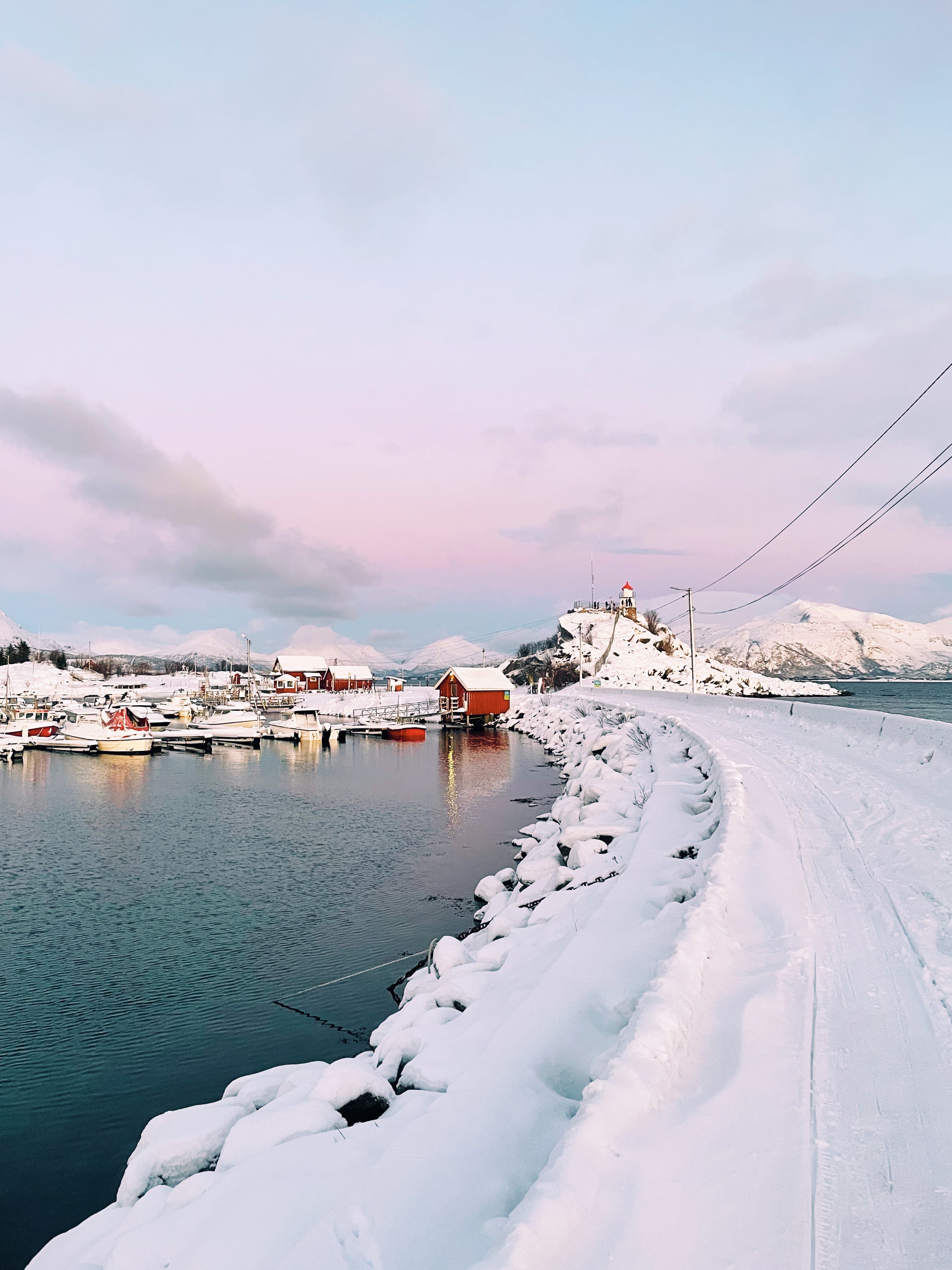
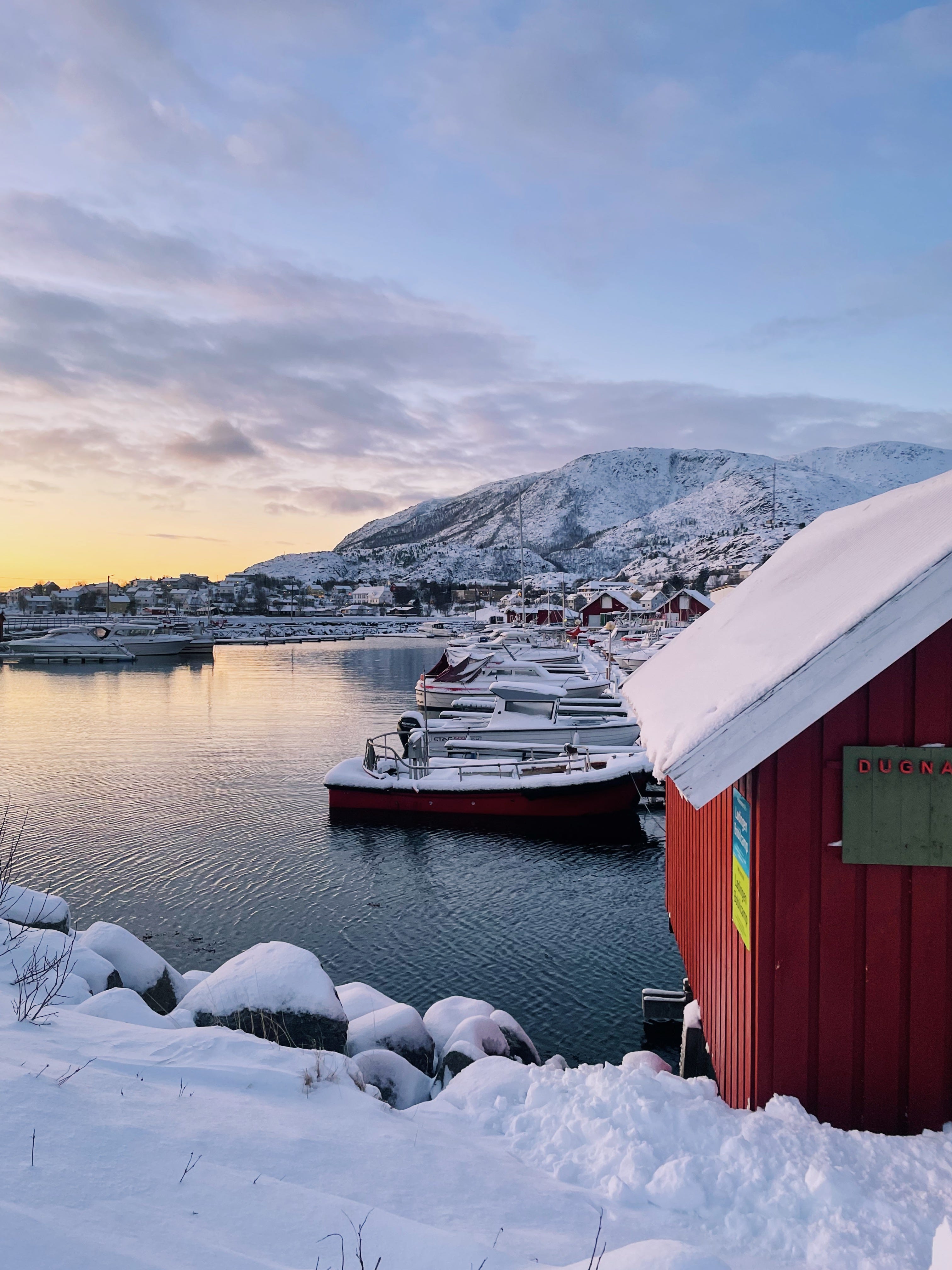
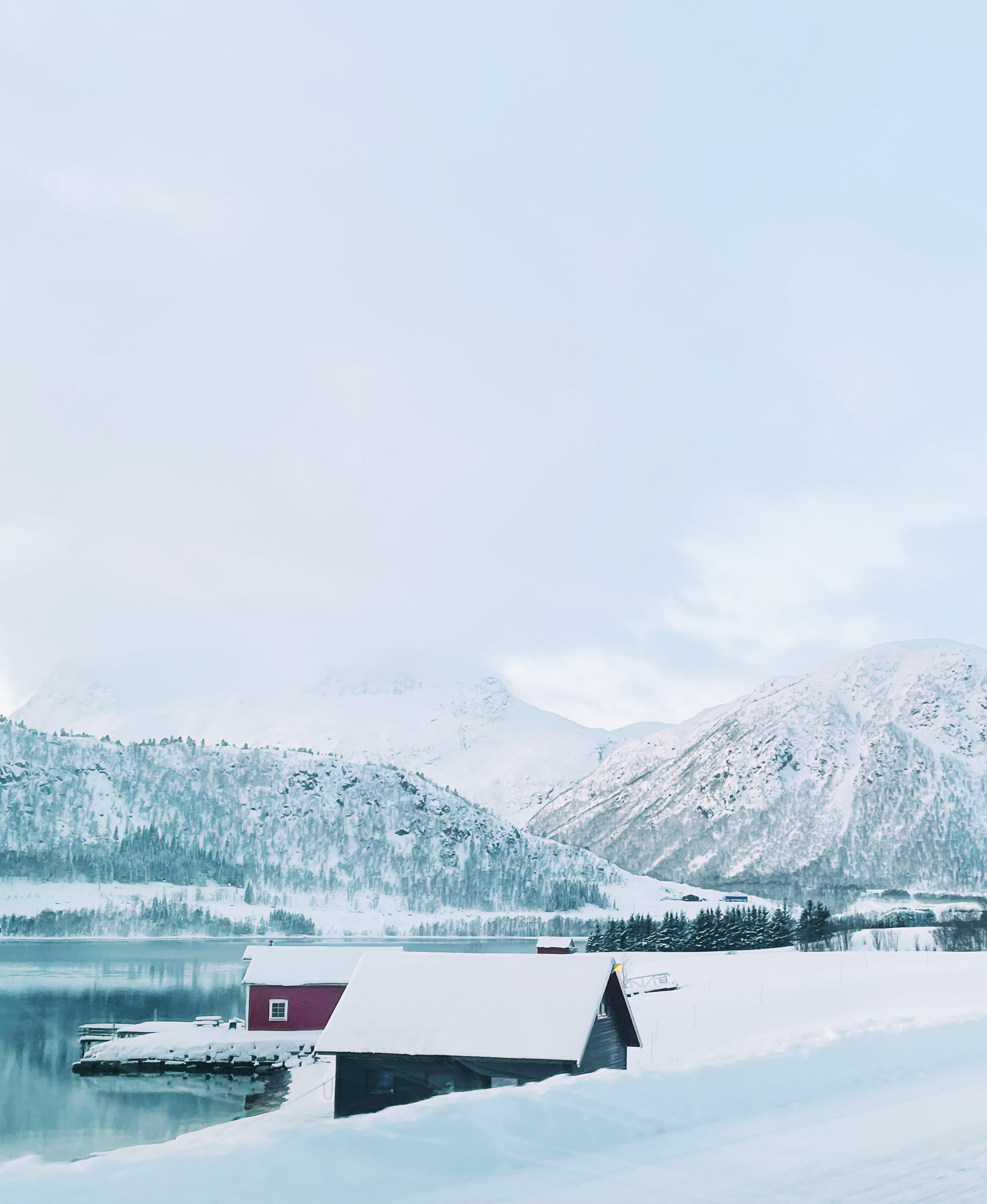
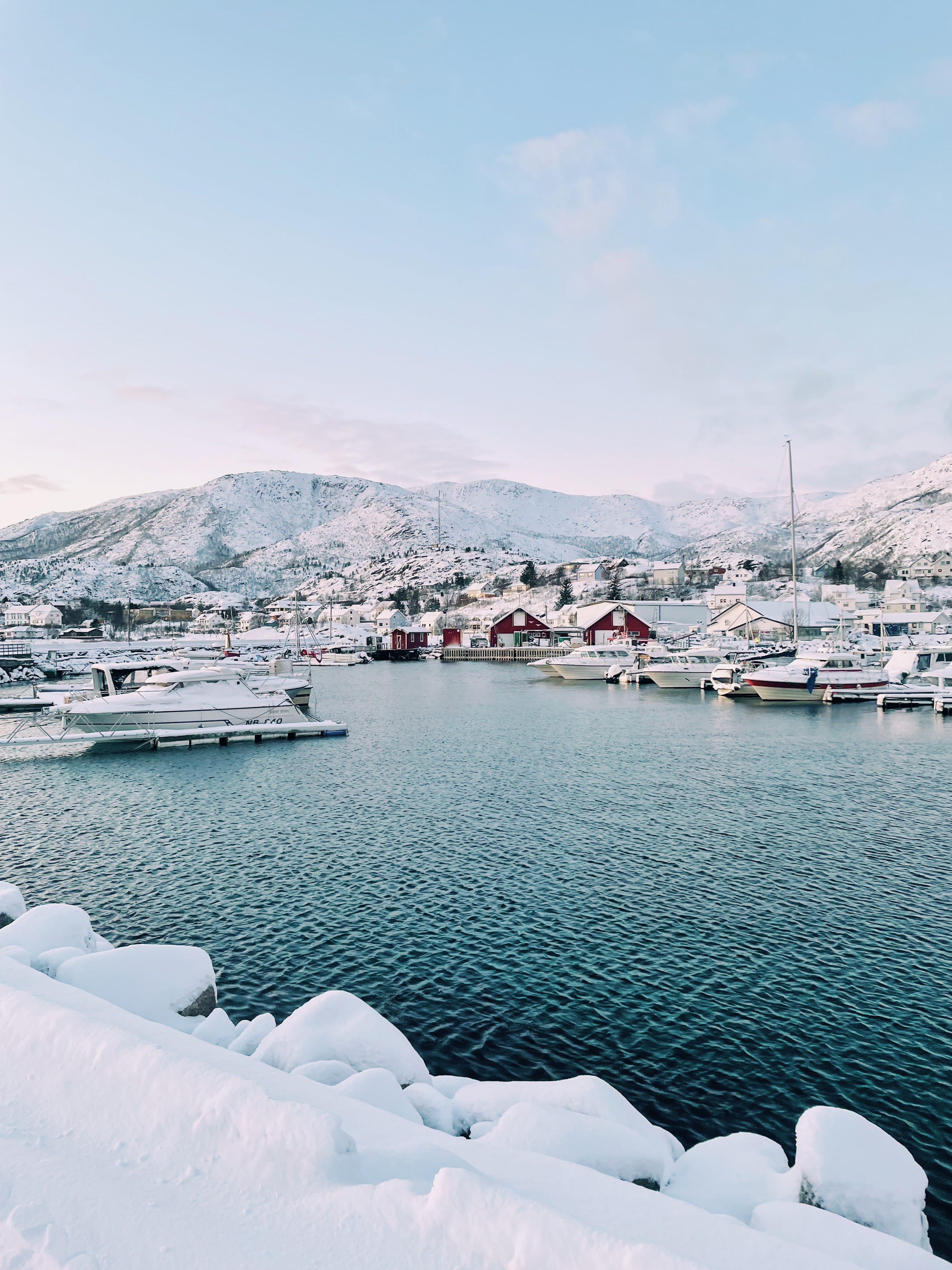
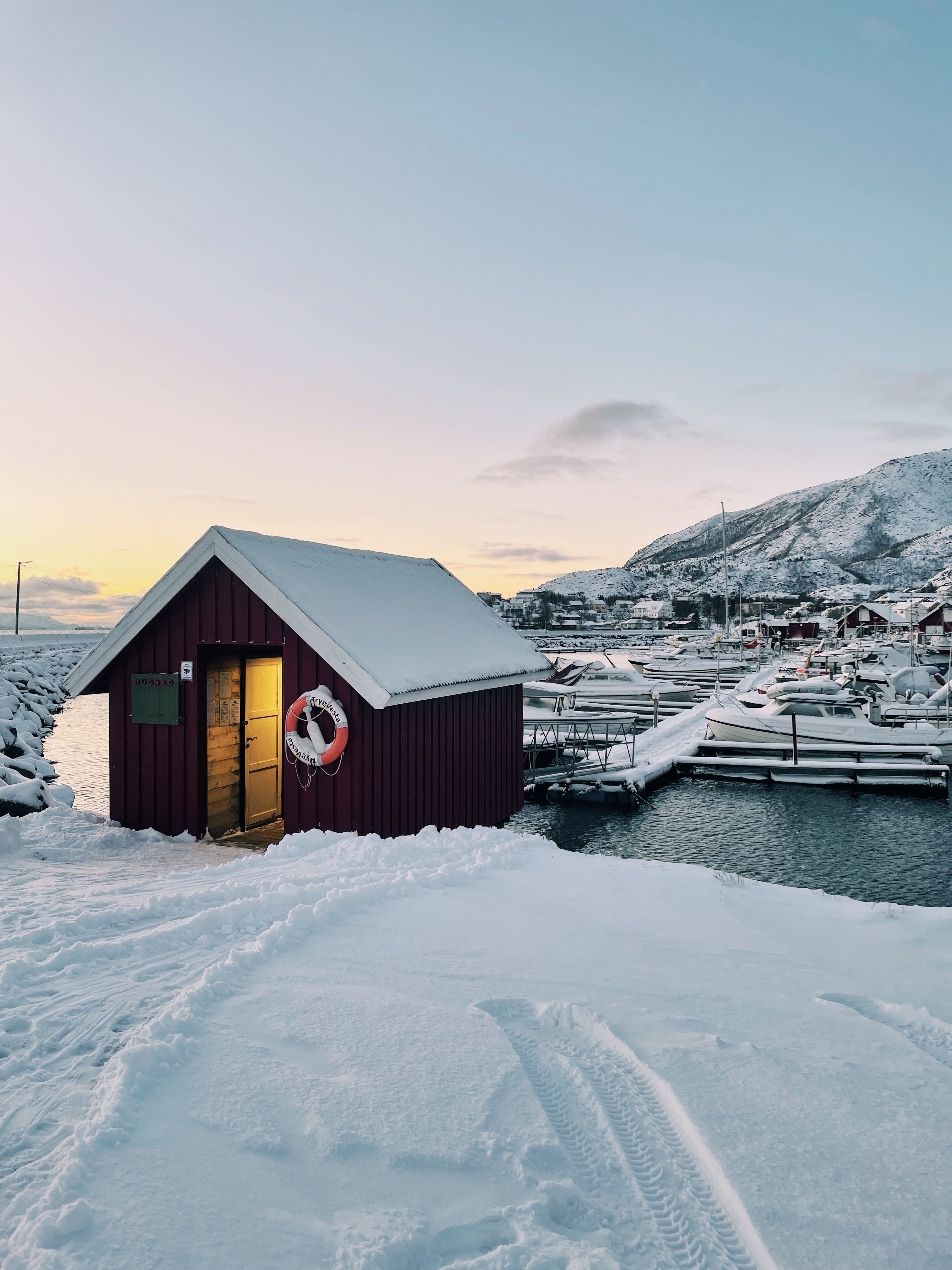
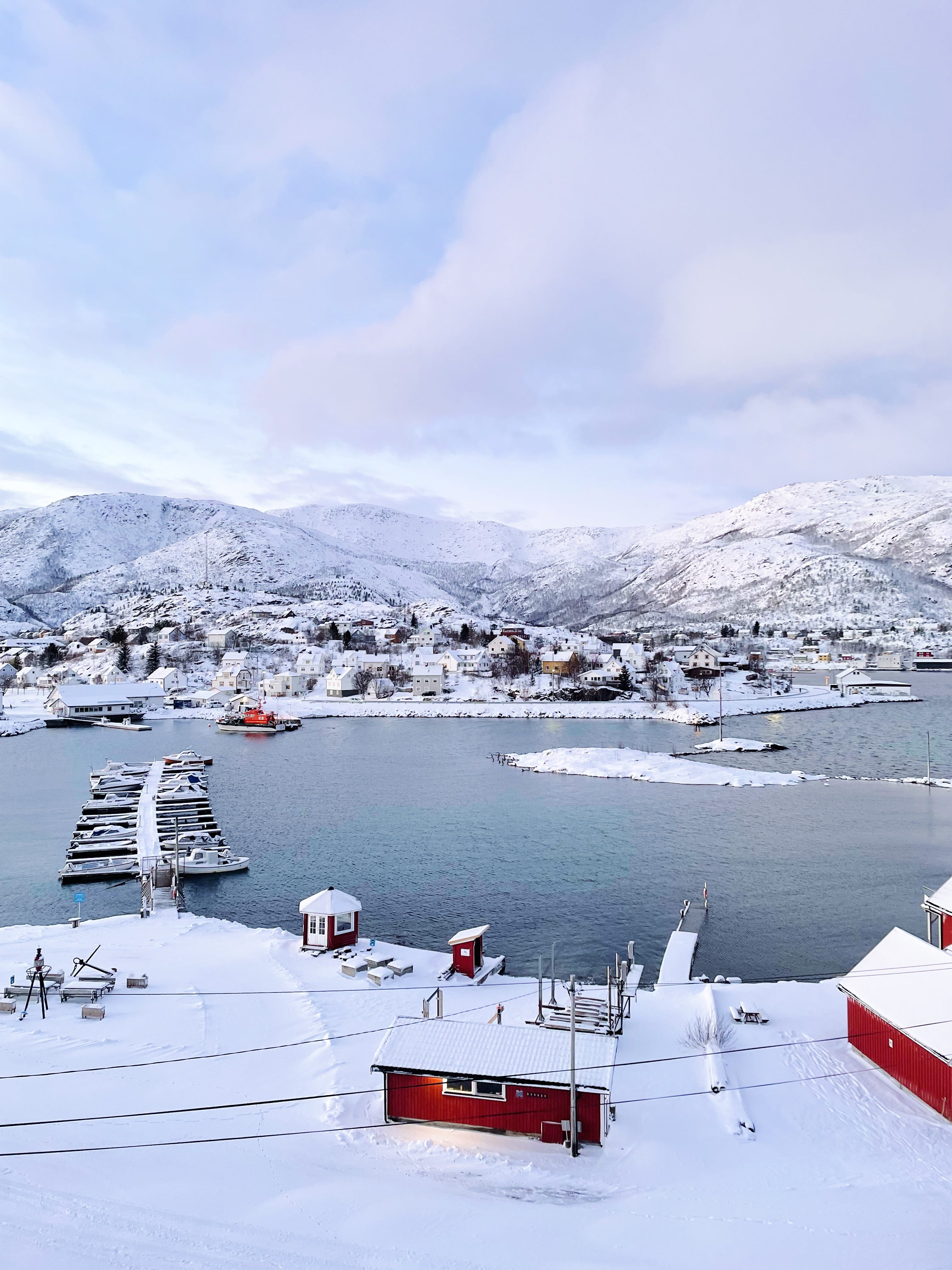
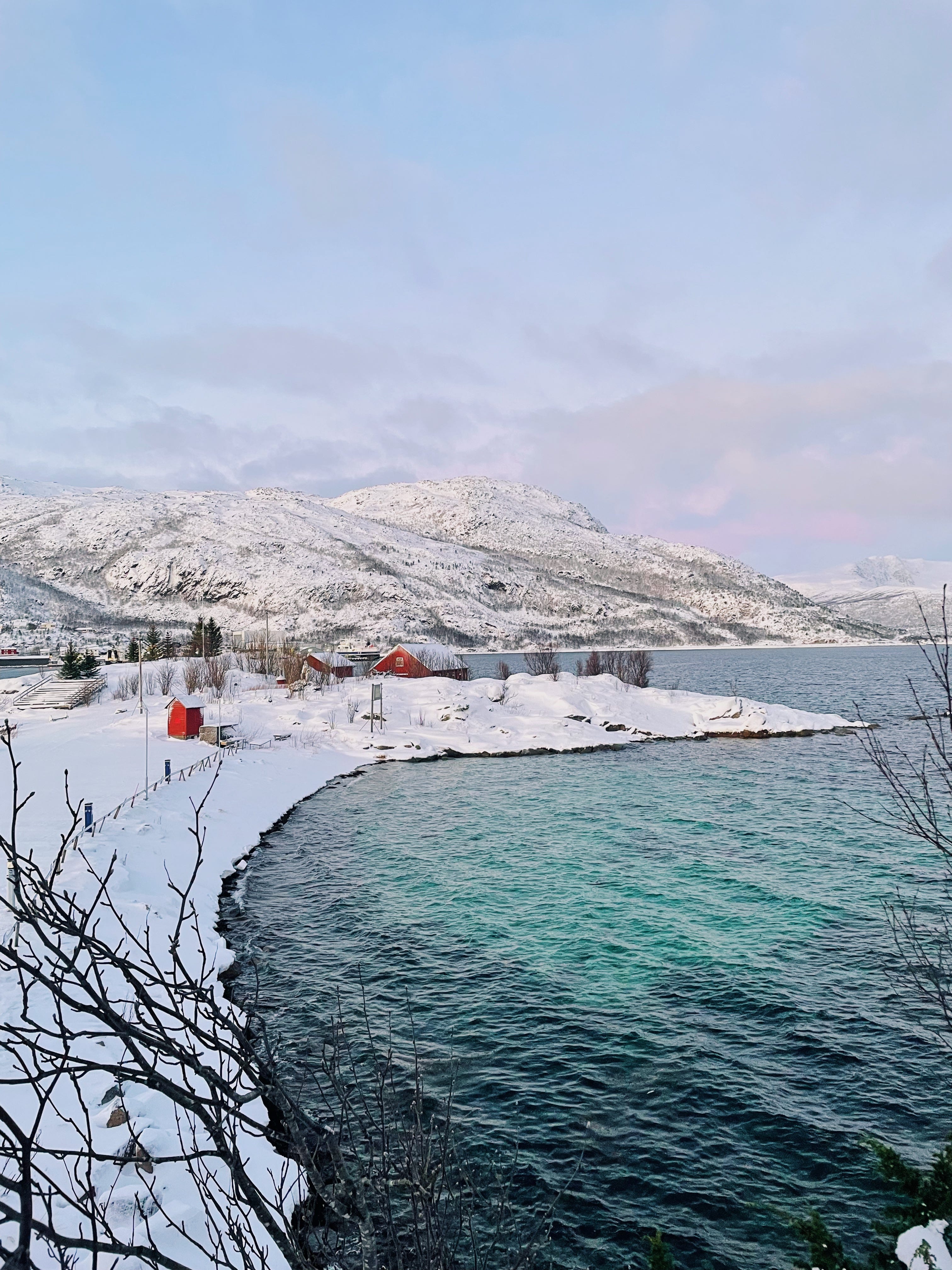
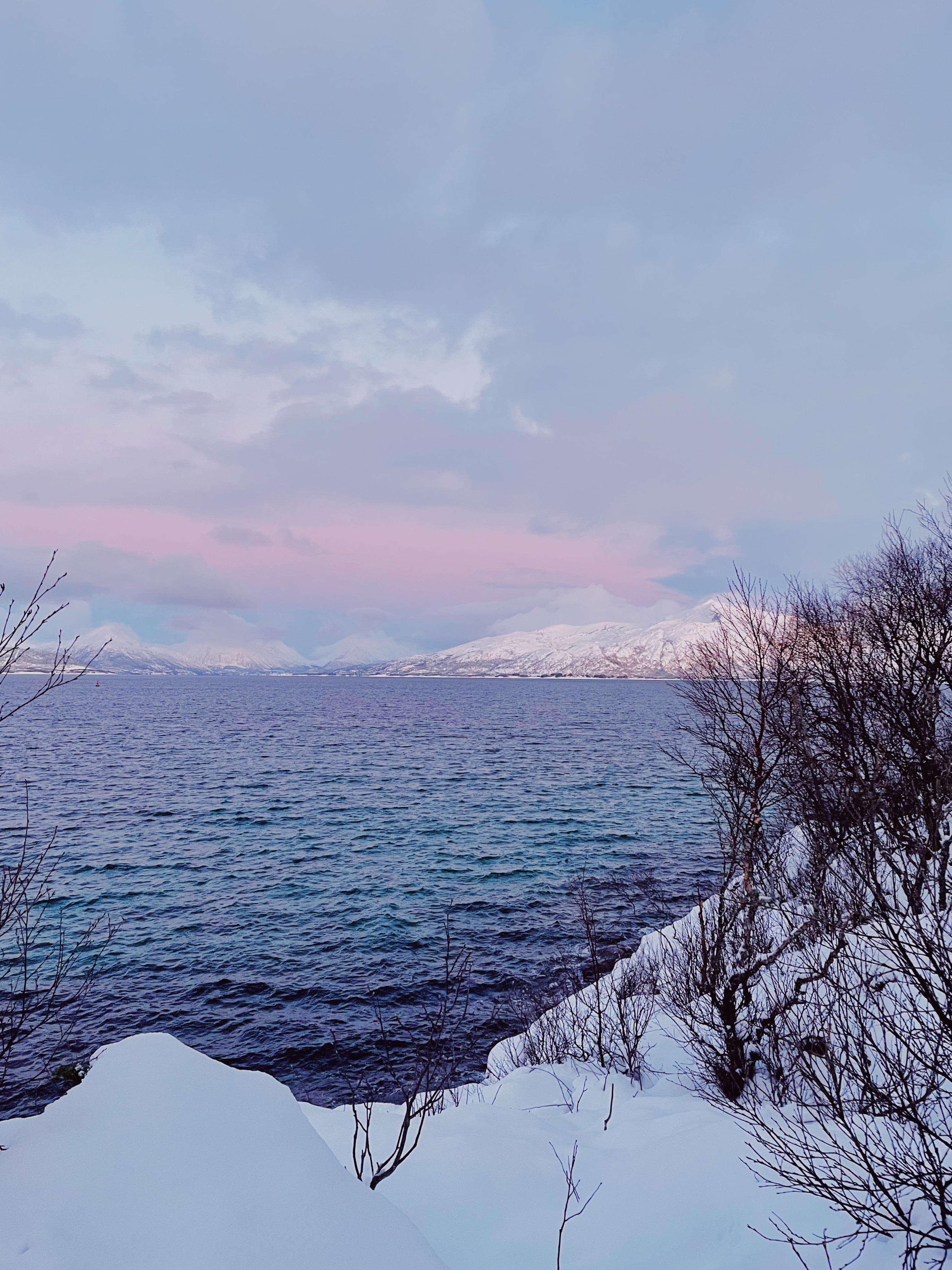
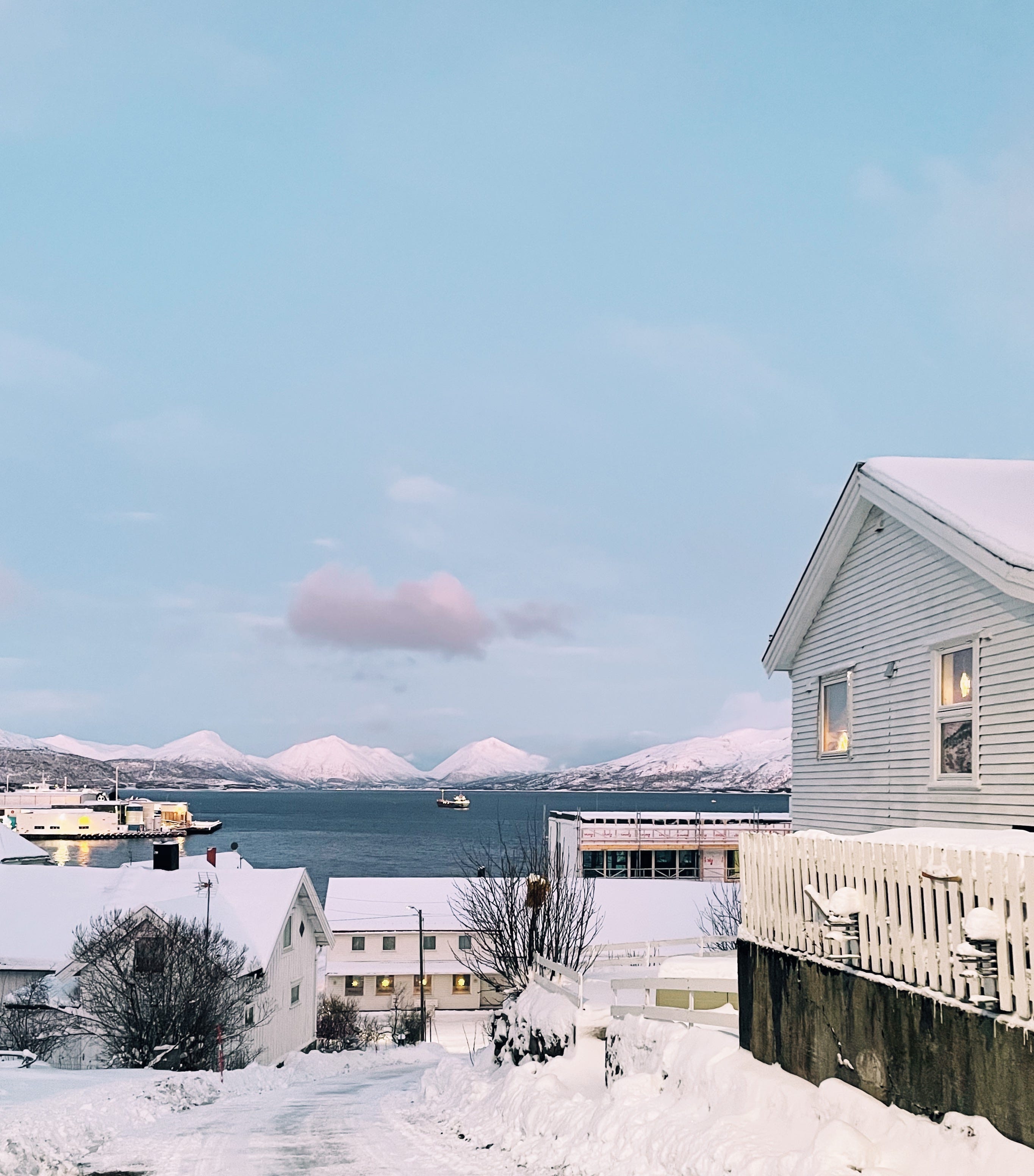
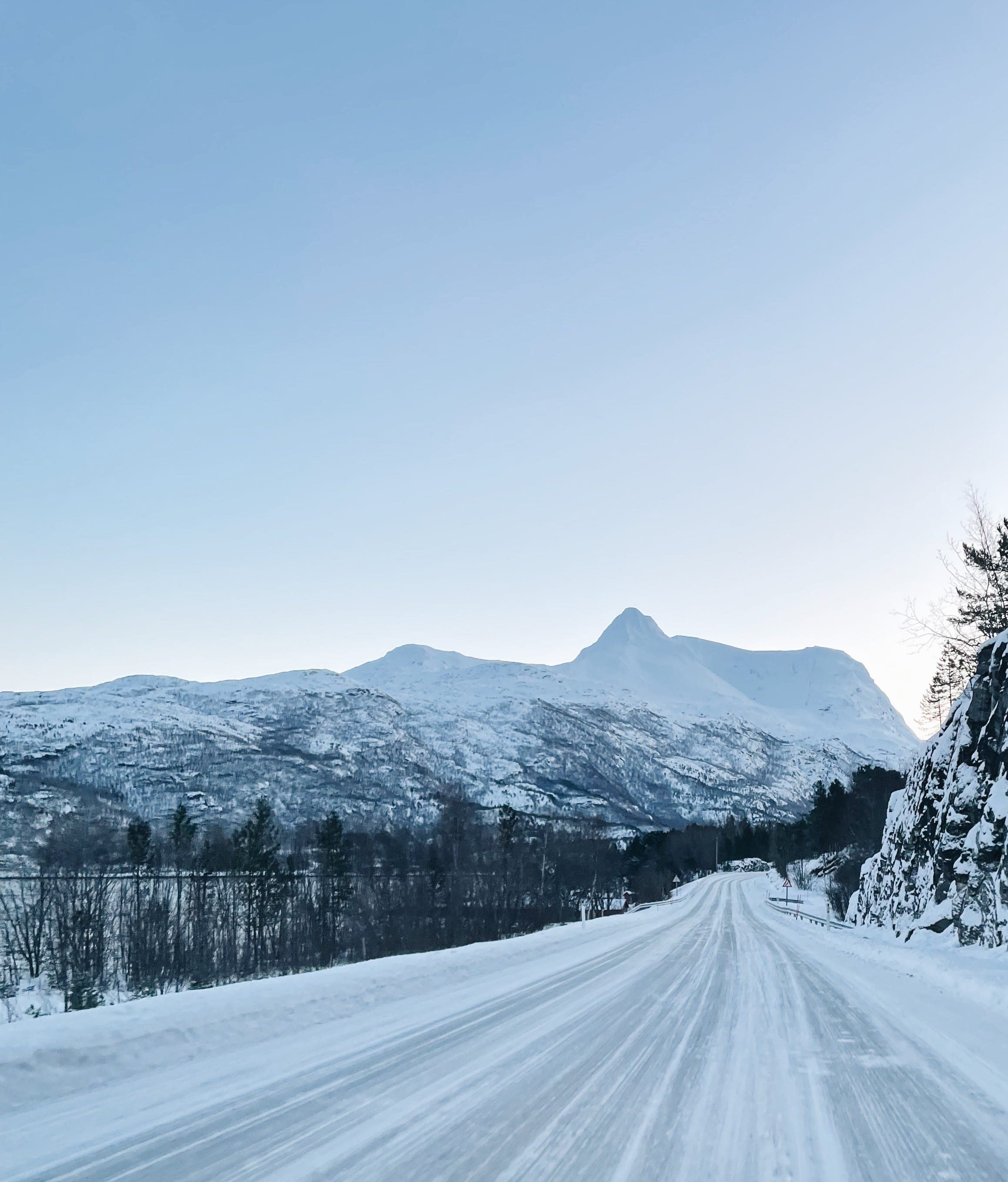
If you were to venture further into the arctic circle - to Svalbard, for example, the remote archipelago halfway between mainland Norway and the North Pole - you would experience total polar night, where the sun stays so far beneath the horizon that the skies stay pitch black for two months. Not so in Narvik, which is really only just above the arctic circle, in the scheme of things. The sun doesn’t rise here in mid-winter, but it does get light. You wake to deep blue hues, soft and muted. Days here are like a suspended twilight: candyfloss skies painted in glowing pastels, softened by the absence of shadows. It really is dark by 2pm, but it’s a proper night sky, alight with stars and, often, the northern lights. Here was the paradox of an arctic winter: zero hours of sunlight, but more hours of colourful, beautiful sky than you could wish for in London.
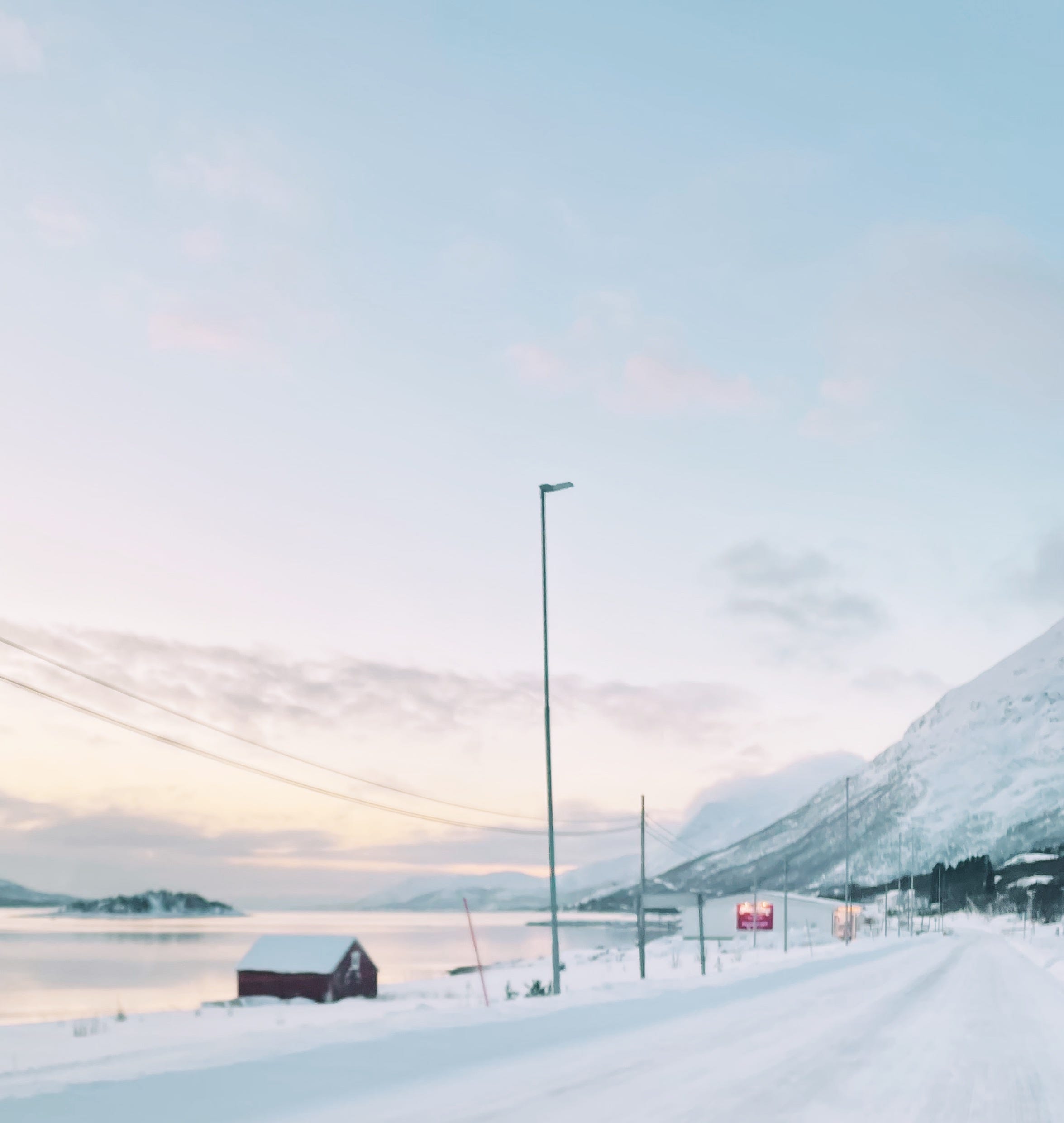
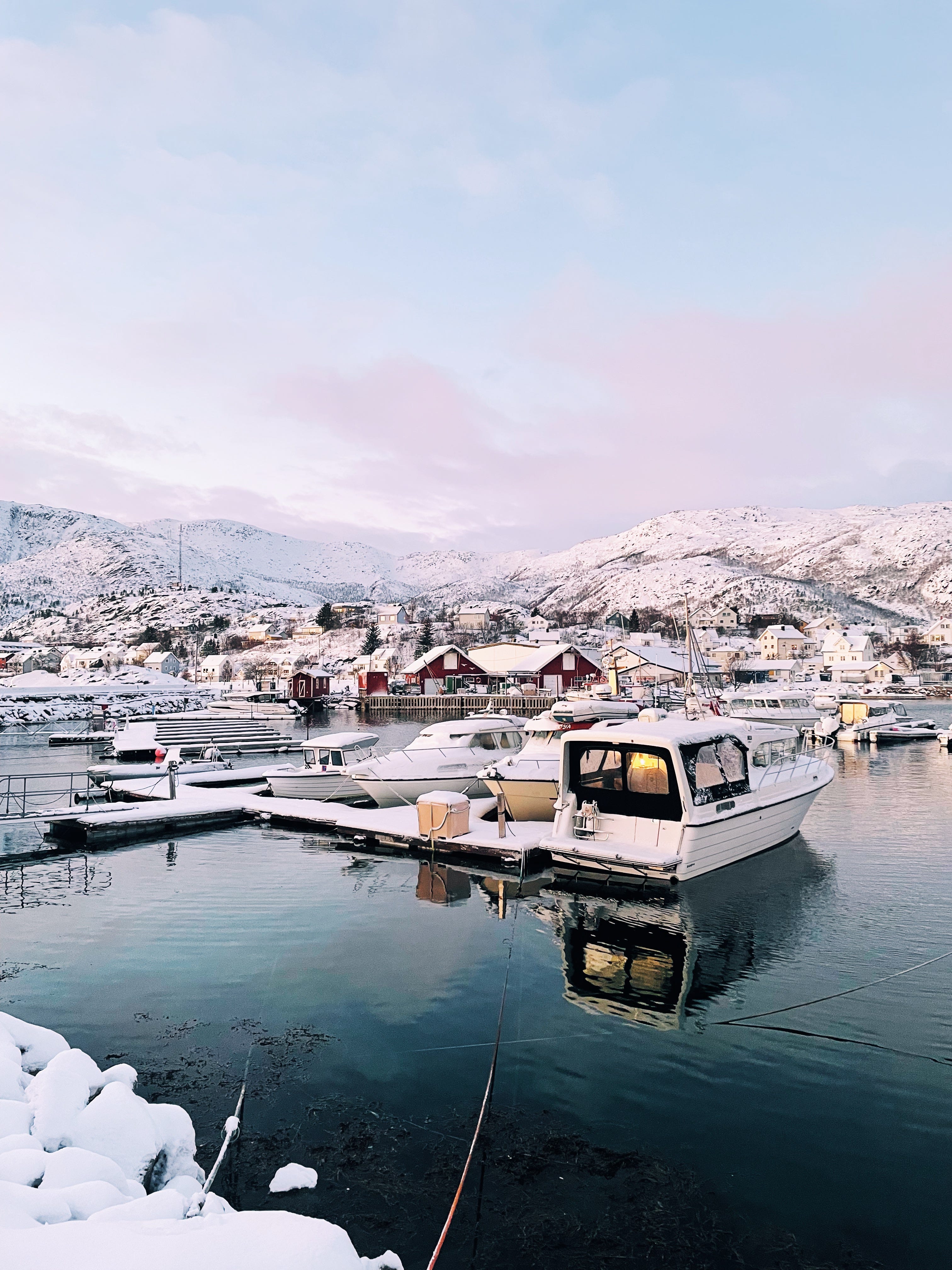
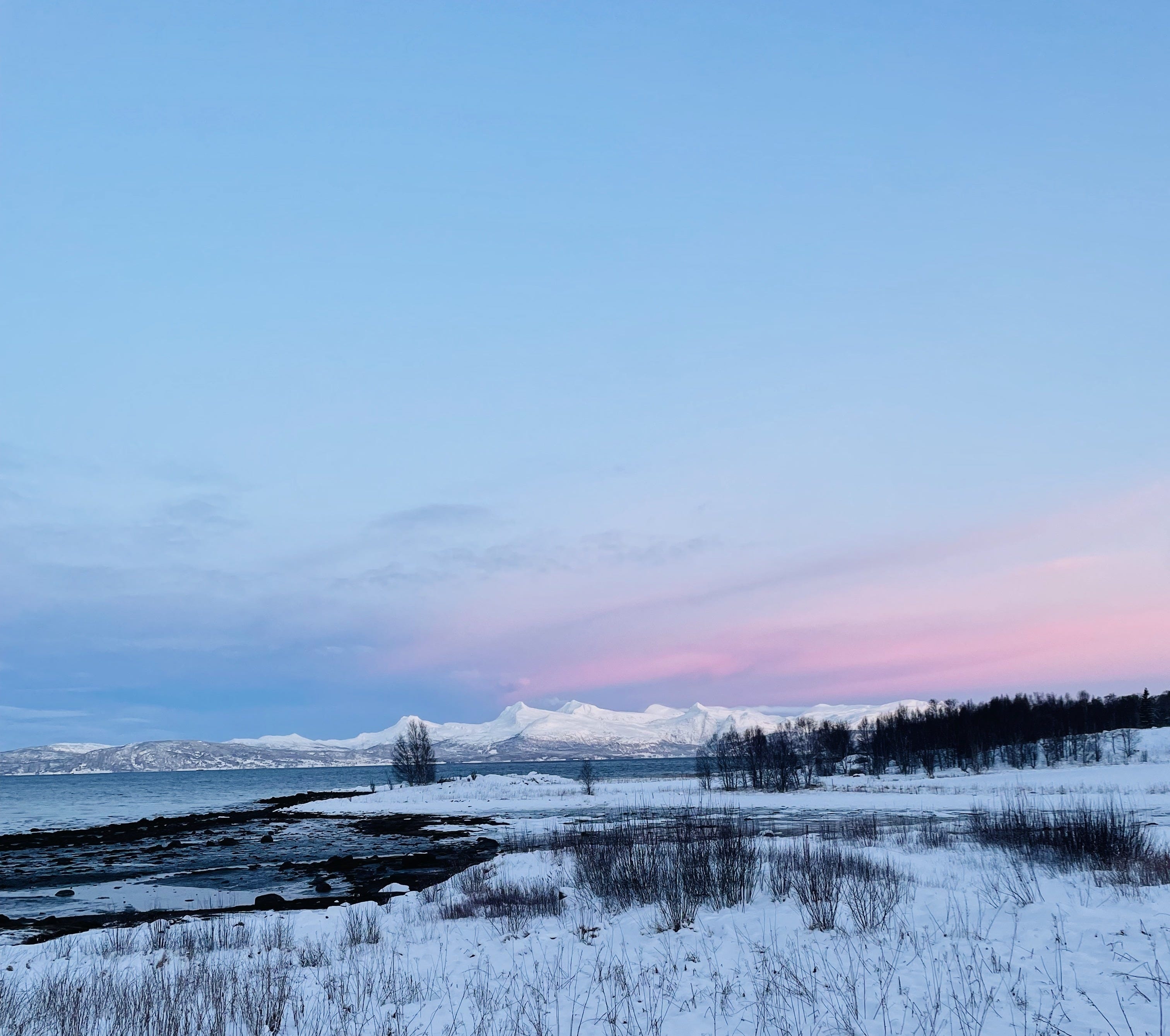
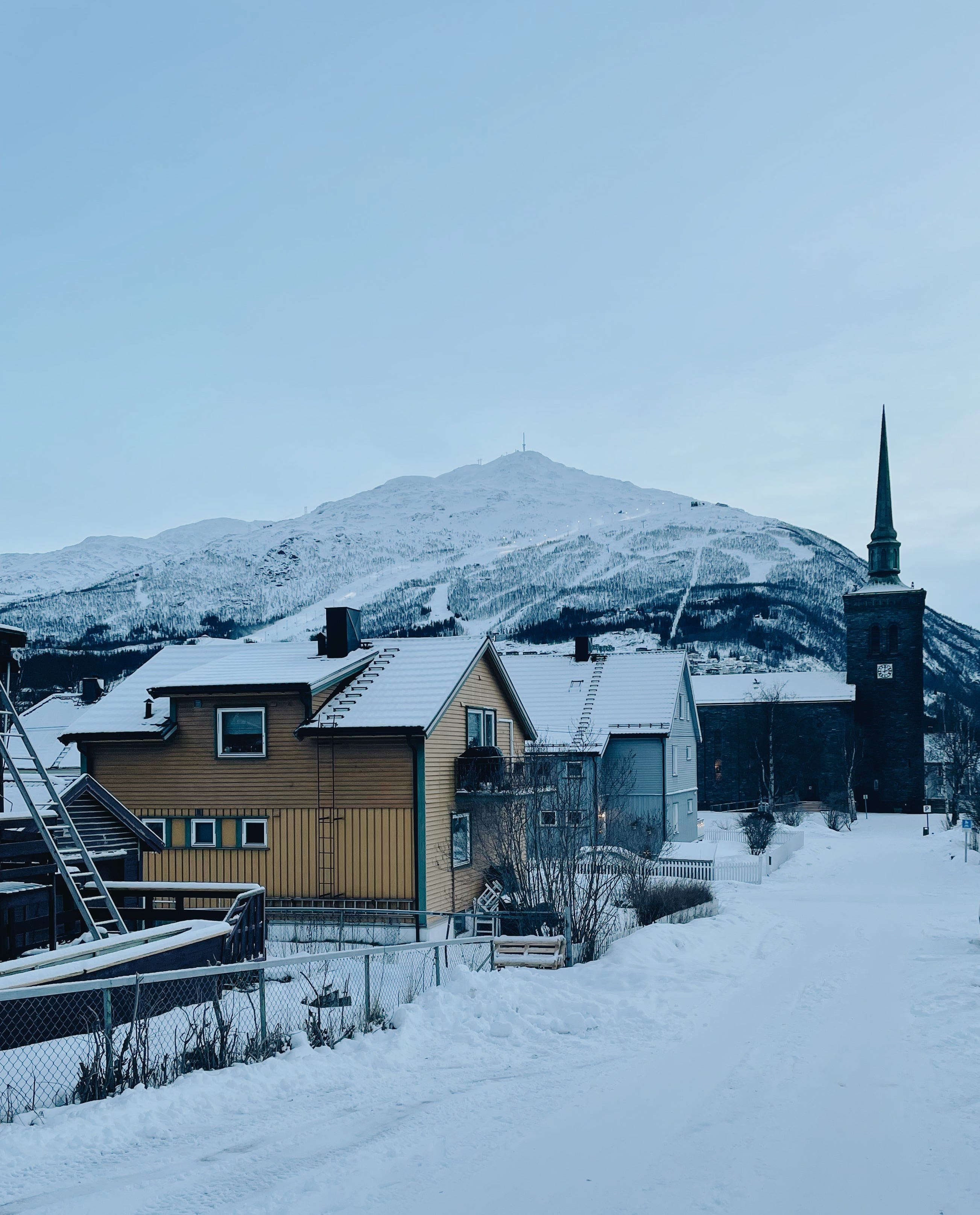
In some ways, my Swedish friend was right that there wasn’t very much to do. Narvik is home to a major ski resort, and I had notions that I might slip away from my never-been-skiing partner for a few hours on the slopes, but it turned out to be a few weeks before it opened for the season. While it was light, we walked through snowy streets, past Scandinavian stereotypes of babies sleeping in prams outside the nursery and small children walking home alone from school. We followed trails into the woodland, which opened out onto the icy fjord and looming mountains. We spent dark afternoons in the city’s railway museum, the military museum, the library. There were cafés for cinnamon buns and coffee, although I was sad to realise the once-pretty town centre had emptied out decades before, moving everything into a brightly-lit, winter-weather-friendly shopping centre which felt like it could be absolutely anywhere in Europe.
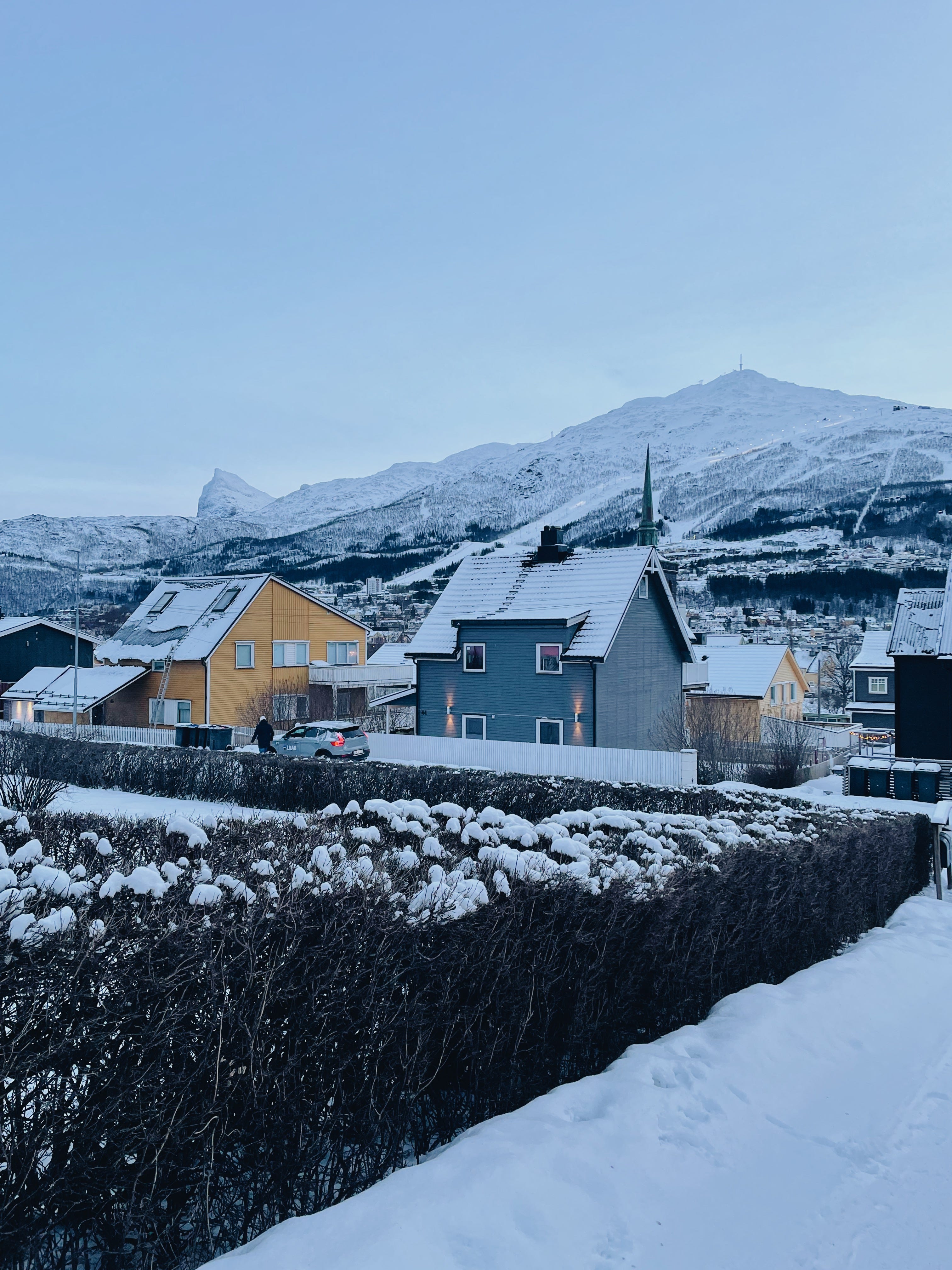
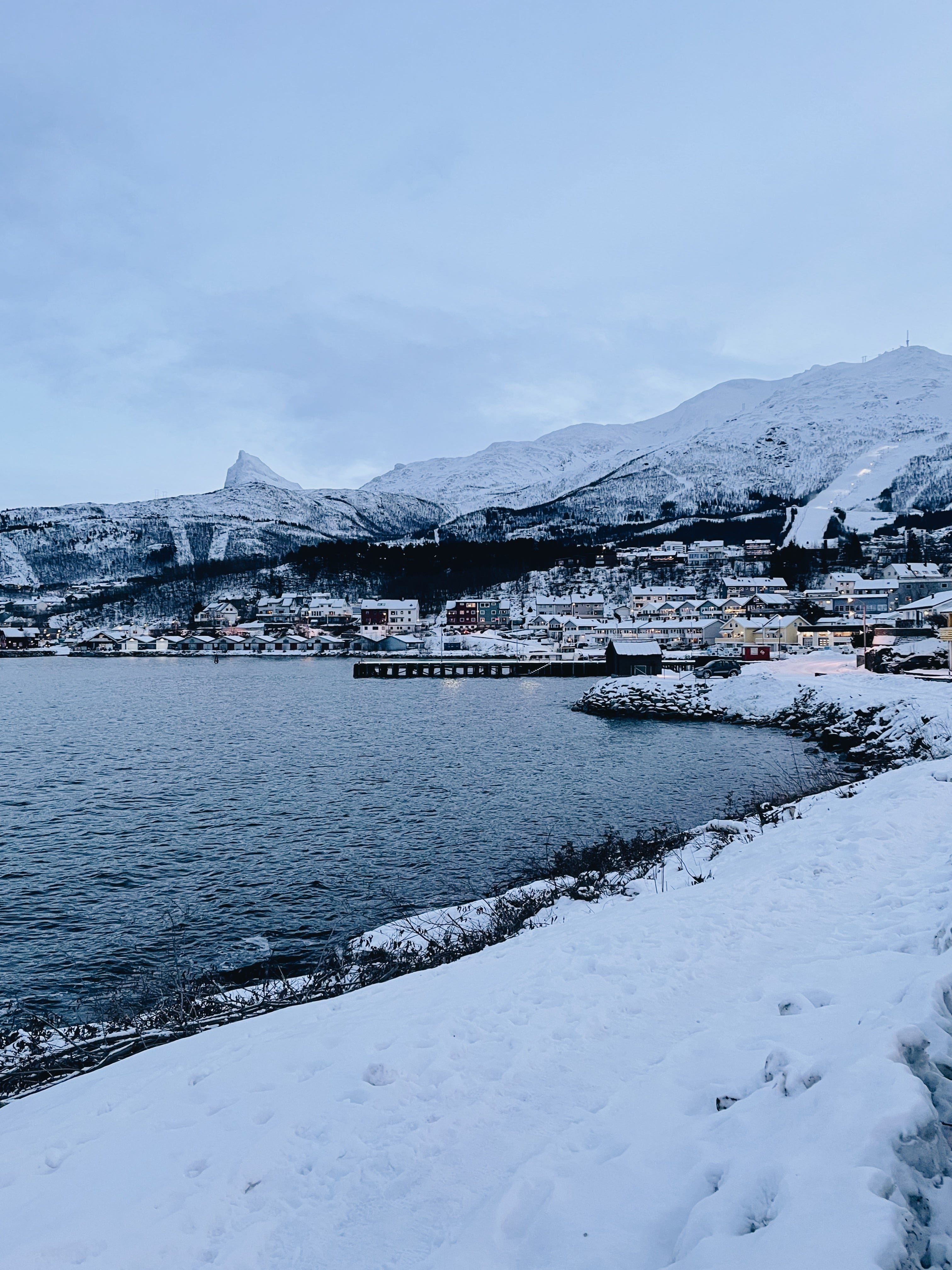
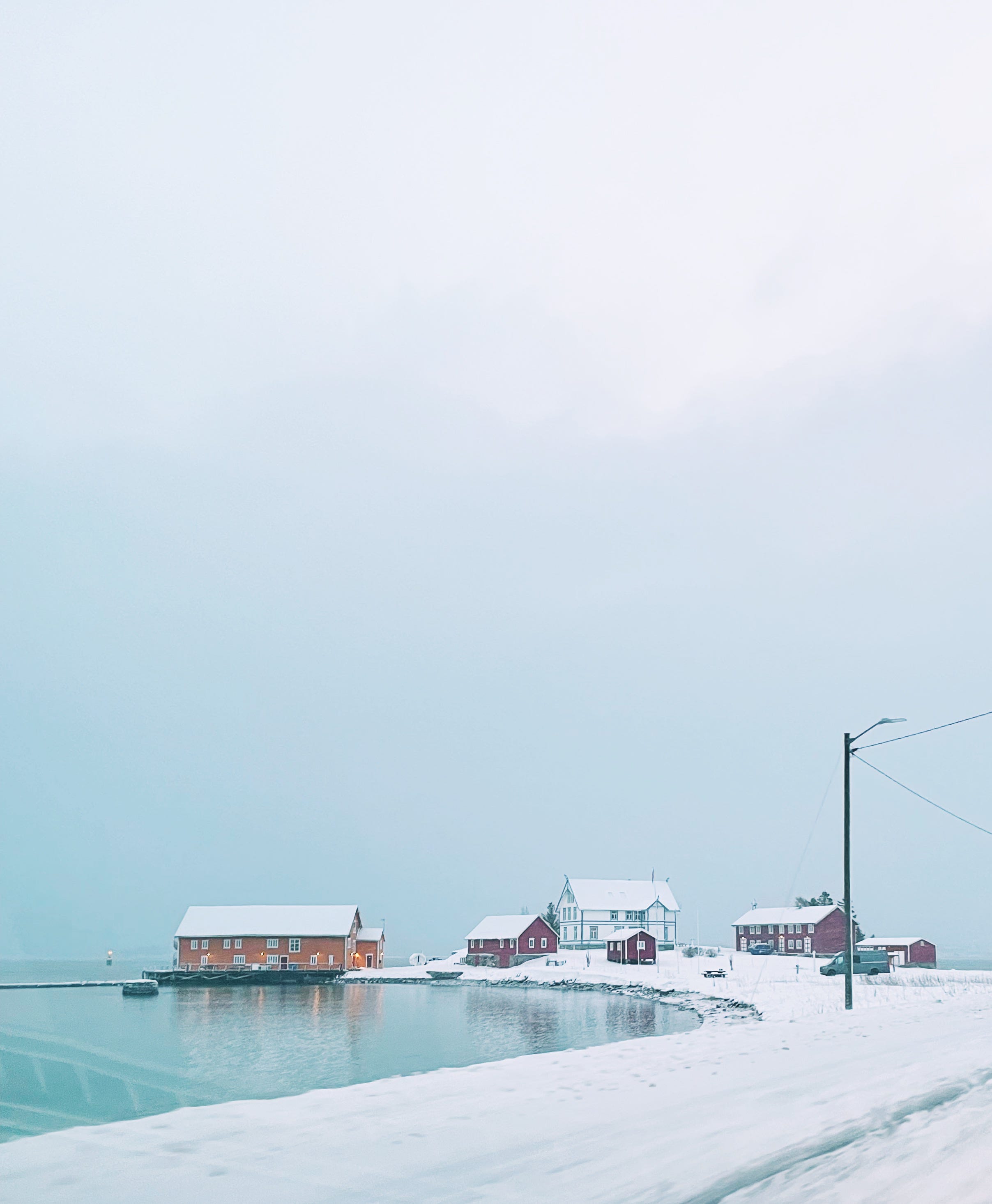
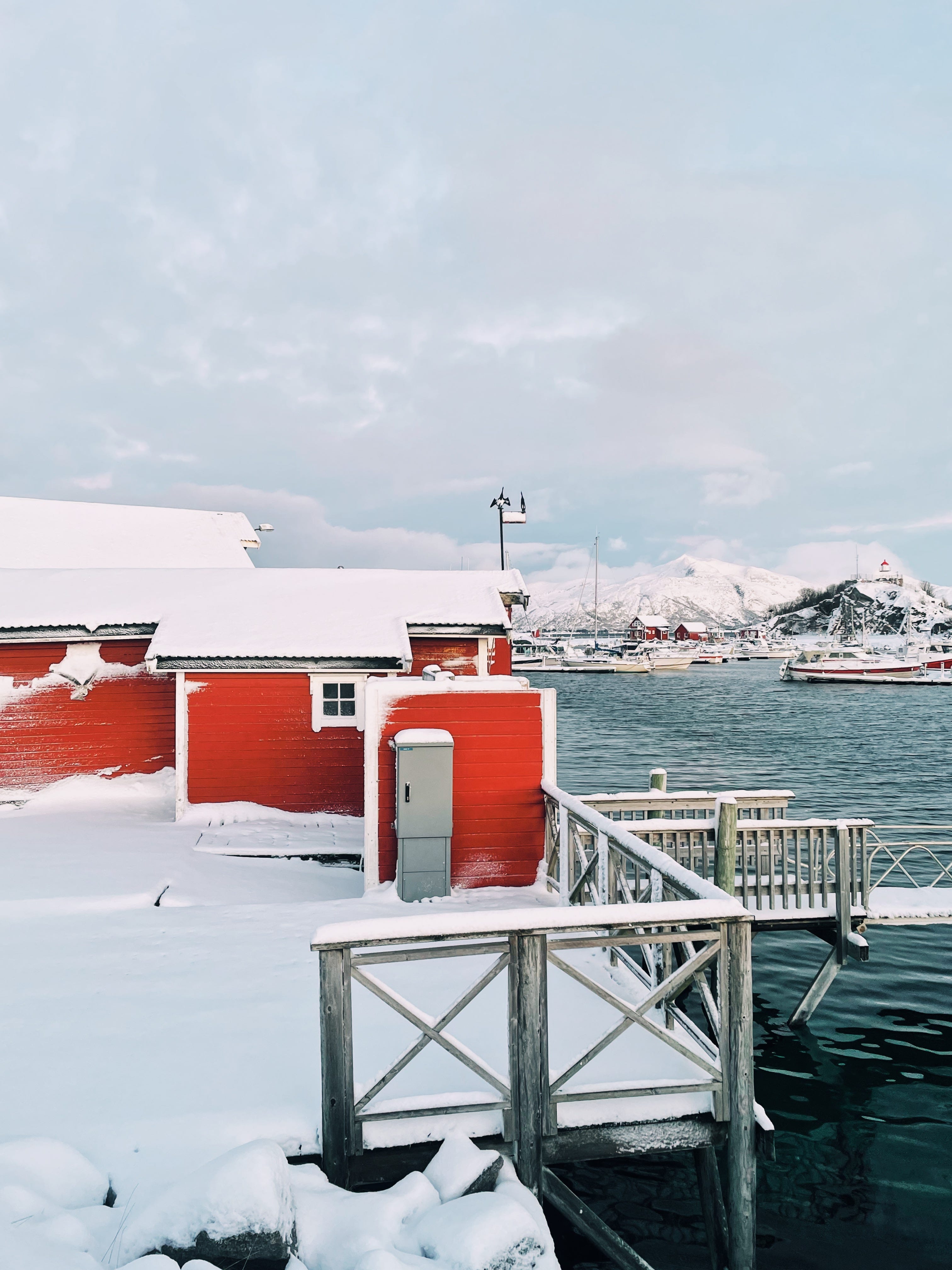
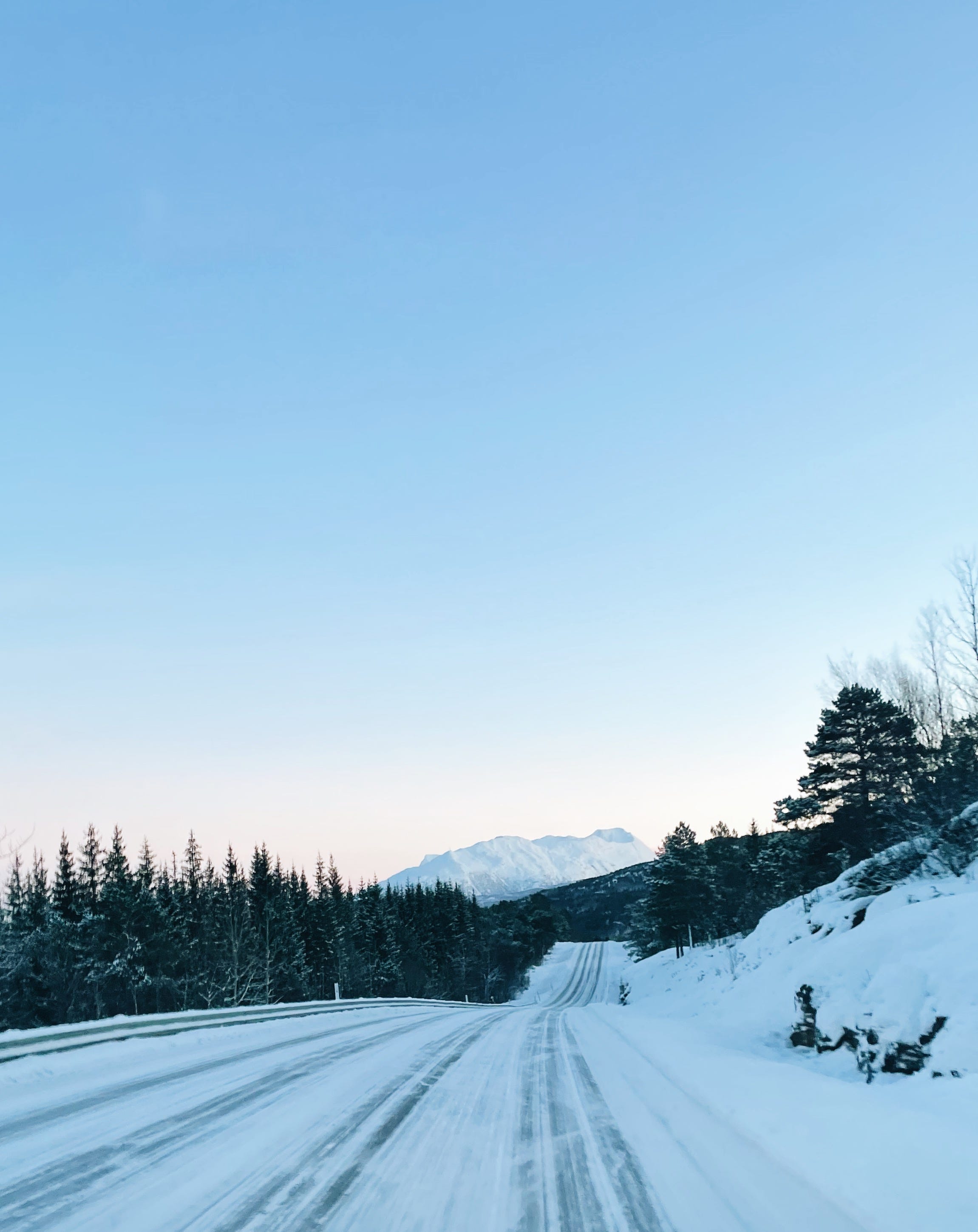
But: who needed to do anything, in a place like this? The best way to pass time here was to drive (carefully, slowly, with winter tyres), out of the city and into winter wonderland. We stopped for black filter coffee and a service station cinnamon bun and watched as a moose, long-legged and magnificent, ambled past our car. On a long summer day, you could easily drive from Narvik out to the Lofoten archipelago: with just a few hours of wintery twilight to play with, we could only get to the very beginning of it. We got as far as Lødingen, a picturesque fishing village whose red cabins seemed to glow under the pastel skies. We walked for hours, taking it in, not caring a bit about it being minus ten.
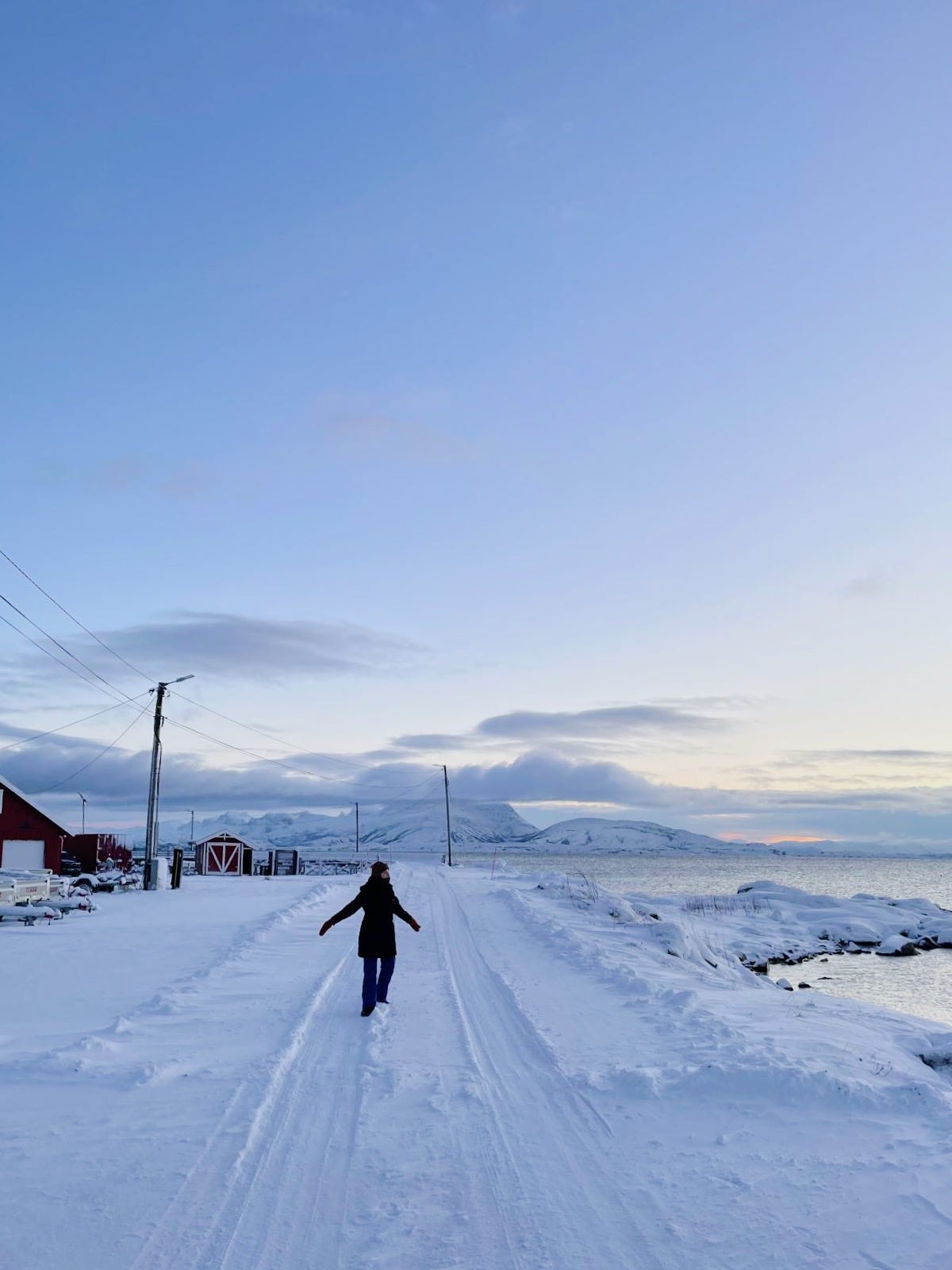
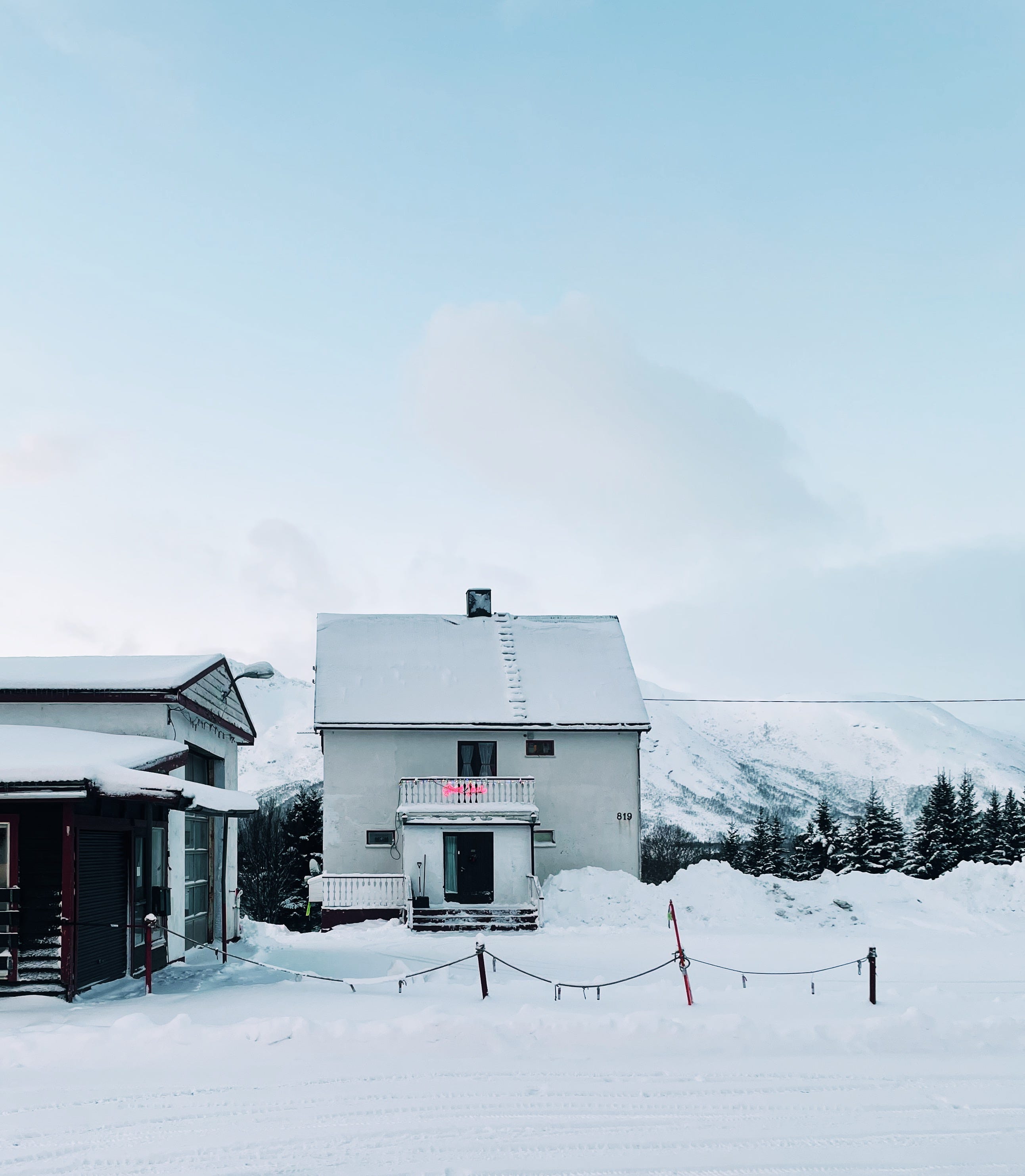
This is a solstice post disguised as a Northern Norway post. The link feels tenuous, until it doesn’t. I used to dread December’s short days, but I don’t think I’ve ever loved a winter day as much as I loved our days in Narvik, where the sun doesn’t even rise. There might be a profound lesson in here somewhere, about how there is joy to be found in leaning into the extremities of things; about embracing them instead of hiding from them. A less profound lesson too, about how it’s possible for winter to be, well, good. And the least profound lesson, but the one I’m most eager to build into my life: a trip to northern Scandinavia is always a good idea.
Plenty of photos to finish: a Christmas treat.
Now that I haven't been seeing the heaps and heaps of snow I used to see as a child here anymore, I've been craving for a trip to a winter wonderland like Norway. Your photographs are beautiful!
Loved this piece 💛 I’ve recently been dreaming of visiting Norway and this only intensified that itch!